If you have ever looked at your customer list and thought, “Cool, we made a sale,” here’s a better way to think: “Great, we’ve started a relationship.”
Because in today’s world of subscription models, loyalty programs, and one-click alternatives, success isn’t about how many people buy once. It’s about how long they stay around and how much they spend over time.
In this blog we will explore the world of Customer Life Time Value (CLV), a metric that doesn’t just tell you how well you are selling, but how smartly you are growing.
We will unpack it without any jargons, making it simple enough to put it in action.
Customer Lifetime Value Meaning
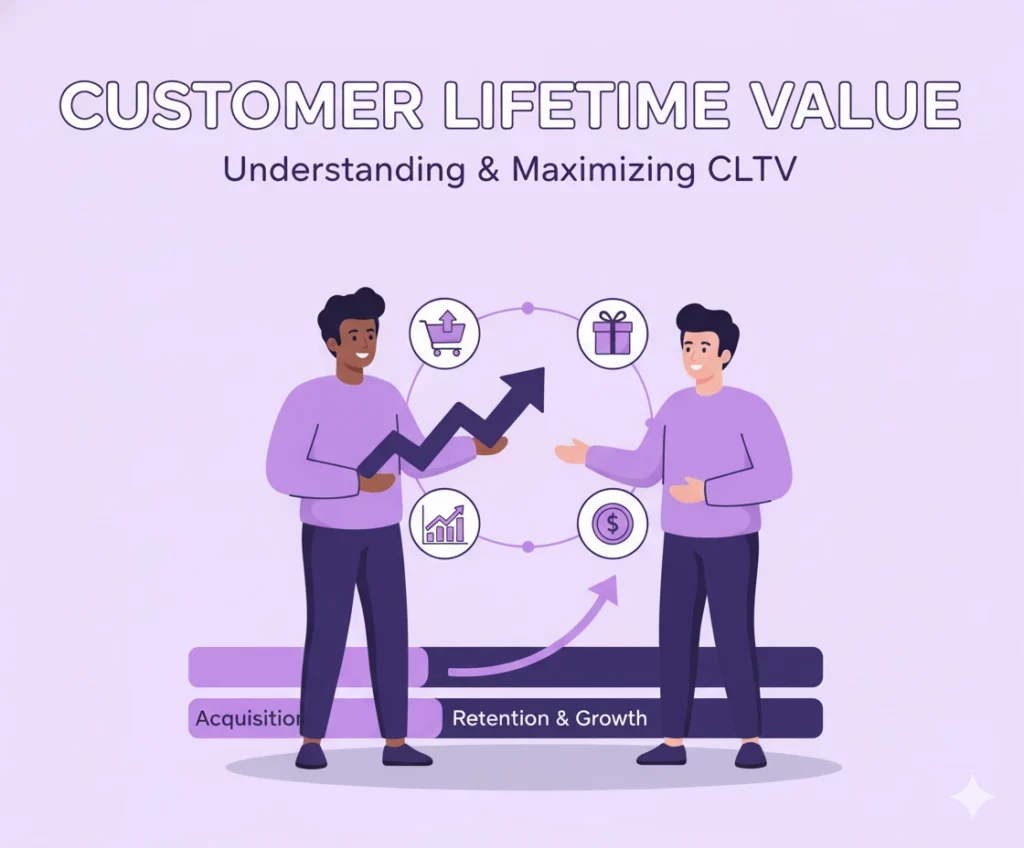
Customer Life Time Value (CLV) is the total revenue you can expect from a single customer throughout your entire relationship with them. It answers one very powerful question: “How much is each customer really worth to my business?”
Instead of just celebrating one purchase, you are looking at the entire journey, from the first transaction to the last renewal, upgrade, or referral.
That’s why customer lifetime value meaning goes beyond money. It reflects loyalty, engagement, and the emotional connection that keeps customers choosing you over everyone else.
This perspective becomes even more powerful when supported by AI-powered analytics platforms like Agentic AI, which help businesses uncover customer patterns and predict behaviors that impact long-term value.
Why Is Customer Life Time Value Necessary for Modern Industries?
Because retention is the new acquisition. Studies show that acquiring a new customer can cost up to five times more than retaining an existing one. Yet many brands still chase new leads like it’s a race, forgetting that their real goldmine is already in their CRM.
Here’s why customer lifetime value analysis matters across industries:
- Retail and E-commerce: CLV helps brands decide where to invest marketing dollars, whether in loyalty programs, personalized recommendations, or better delivery experiences.
- SaaS and Subscription Businesses: Knowing your CLV helps predict recurring revenue and manage churn.
- Finance and Insurance: Renewals and upgrades depend heavily on understanding the long-term worth of each client.
- Hospitality and Travel: Frequent guests are worth more than one-time visitors. CLV reveals that difference clearly.
- Healthcare: Patient loyalty and preventive care plans thrive when CLV insights guide service models.
In short, customer lifetime value is your compass for sustainable growth, not just quick wins.
Meanwhile, you can see this in action in our Healthcare Call Center blog, which explores how data and automation enhance patient and customer loyalty over time.
Customer Life Time Value Formula
Let’s make this simple. The customer lifetime value calculation looks like this:
CLV = (Average Purchase Value × Purchase Frequency) × Average Customer Lifespan
Here’s what that means:
- Average Purchase Value (APV): How much does a customer typically spend per purchase?
- Purchase Frequency (PF): How often do they buy from you in a given period?
- Average Customer Lifespan (ACL): How long does a customer stay before switching or churning?
Multiply these together and you get the total lifetime value.
Lifetime value calculation example:
If your average customer spends ₹2,000 per purchase, buys five times a year, and stays for three years, then:
CLV = ₹2,000 × 5 × 3 = ₹30,000
That’s how much one customer is worth over time. Now imagine scaling that across 1,000 customers. That’s where the real power of customer life time value shows up.
Metrics That Impact Customer Life Time Value
Think of customer lifetime value as a puzzle made of data. Each piece matters.
- Customer Acquisition Cost (CAC): The amount spent to acquire a customer. Lower CAC with high CLV equals long-term profitability.
- Customer Retention Rate (CRR): The percentage of customers who stay over time.
- Churn Rate: The percentage of customers who stop buying.
- Average Order Value (AOV): Helps predict how much each transaction contributes to customer lifetime value.
- Purchase Frequency: How often customers return to buy.
- Net Promoter Score (NPS): Loyal customers refer others, increasing your lifetime value indirectly.
Keeping these metrics aligned gives you a clear view of your growth potential.
AI-driven tools like Contact Center Speech Analytics make it easier to collect this data automatically from every customer conversation, helping you monitor sentiment, behavior, and purchase trends in real time.
6 Ways to Increase Customer Life Time Value
Everyone wants customers who buy more, stay longer, and keep spreading the word. The secret? You don’t need rocket science. You just need to nurture the relationship from day one.
Here are six proven ways to boost your Customer Lifetime Value (CLV) and turn one-time buyers into long-term believers.
1. Personalize Everything
“Dear Customer” just doesn’t cut it anymore.
When people feel recognized and understood, they buy more and stay longer. True personalization means:
- Recommending products based on browsing and purchase history.
- Offering targeted deals that match where customers are in their journey.
- Using behavioral automation to send helpful, not random, reminders.
- Engaging with customers in their preferred language through Multilingual AI Voicebots that make every interaction feel natural and human, no matter where they’re from.
Netflix is a perfect example. Every recommendation you see is powered by predictive analytics designed to keep you watching and renewing.
Relevance equals retention. Simple as that.
2. Improve Onboarding
Imagine downloading a new app and getting lost in pop-ups and tutorials. You’d quit, right? That’s what poor onboarding does. If customers don’t see value quickly, they move to your competitor.
Here’s what a great onboarding should do:
- Highlight value, not just features.
- Include interactive guides, tooltips, and quick wins like “You’ve completed your first setup.”
- Offer real-time help through chatbots, FAQs, or customer success reps.
For SaaS and subscription businesses, strong onboarding reduces early churn and builds confidence. The key is to simply make customers feel capable, not confused, and they’ll stay.
3. Build Loyalty Programs That Actually Reward Loyalty
Most loyalty programs are just coupon machines. The best ones create emotional connection.
Design programs that reward both spending and engagement:
- Create tiered benefits (silver, gold, platinum) to gamify loyalty.
- Reward reviews, referrals, and social shares, not just transactions.
- Offer exclusive perks like early access or VIP support.
Starbucks does this beautifully. Their app builds habit, not just transactions. Every coffee counts toward your next treat, keeping customers engaged for years.
Loyalty programs work when they feel personal, not promotional.
4. Leverage Feedback Loops
Most brands treat feedback as a complaint form. Smart brands treat it as a strategy.
Listening, acting, and closing the loop are what keep customers loyal.
To make it work:
- Use surveys and NPS scores to identify satisfaction levels.
- Analyze support conversations to find recurring issues.
- Follow up after resolutions to confirm satisfaction.
- Tell customers when their feedback led to changes.
That last step is gold. “We heard you, and we fixed it” turns passive buyers into loyal fans.
Feedback isn’t criticism. It’s direction.
5. Upsell and Cross-Sell Smartly
Upselling and cross-selling should add value, not pressure.
Use insights and timing wisely:
- Watch for behavioral signals, such as when a user hits a feature limit or revisits the same product page.
- Bundle smartly by pairing products or services that naturally complement each other.
- Educate before selling. Explain how an upgrade or add-on solves a problem better.
Amazon nails this with its “Frequently bought together” feature. It’s not pushy; it’s helpful.
Done right, upselling builds trust and raises your average revenue per customer.
6. Automate Retention Campaigns
Customers don’t stop buying because they’re angry. Most just get distracted. Automation helps you stay top of mind without overwhelming them.
Here are easy automation ideas that work:
- Win-back emails: “It’s been a while! Here’s something special for you.”
- Renewal reminders: Emphasize value, not just expiry.
- Milestone messages: Celebrate birthdays, anniversaries, or achievements.
- Reactivation offers: Send customized incentives to bring inactive users back.
Boosting Customer Lifetime Value is not about adding more tools or running flashy campaigns. It’s about understanding customers deeply and showing up consistently.
If your brand is able to personalize, onboard well, reward loyalty, listen actively, sell smartly, and automate care, you’re not just increasing revenue. You’re building a brand that people trust and love.
Because loyalty compounds faster than interest.
Tools like ConvoZen use sentiment analysis and predictive engagement to identify churn risks before they happen. That’s how technology turns retention into a proactive art.
Brands can enable these tactics at scale using advanced conversational platforms in industries like Conversational AI in Retail, designed to automate engagement and personalize experiences at every touchpoint.
Customer Life Time Value Examples
Let’s understand this concept with most appropriate real-world examples:
- Netflix: Uses Customer Lifetime Value analysis to personalize content and increase retention.
- Amazon: Drives loyalty through fast delivery, tailored recommendations, and Prime benefits.
- Starbucks: Encourages repeat visits through its mobile rewards ecosystem.
- SaaS Platforms: Rely on renewals, upgrades, and proactive customer success teams to sustain long-term value.
The takeaway? Every industry can use customer life time value as its backbone for growth.
Tips for Customer Lifetime Management
Even the best plans face challenges. Manage these risks to protect customer lifetime value:
- Watch churn indicators early: Identify drops in engagement before they become lost revenue.
- Diversify acquisition sources: Relying on one channel increases vulnerability.
- Balance CAC and Customer Lifetime Value: High acquisition costs eat into lifetime profits.
- Keep testing: Preferences evolve. Experiment with pricing, messaging, and offers.
- Stay customer-obsessed: Keep improving the experience.
To connect these dots, modern enterprises rely on unified analytics tools like Agentic AI Workflow Automation, which bring together data from multiple sources to give a complete view of customer health.
Customer Life Time Value Analysis
Once you’ve figured out your customer life time value, the next step is understanding what it means. That’s where customer life time value analysis comes into play.
It’s not just about the final number, it’s about uncovering the story behind it. This analysis helps businesses understand why customers stay, how long they engage, and what actions drive the most long-term revenue.
Here’s how customer life time value analysis adds clarity and direction:
- Identifies high-value customers: Find out which segments bring consistent revenue and deserve priority attention.
- Predicts churn early: Behavioral trends and sentiment cues reveal when customers might drift away.
- Refines marketing ROI: Helps you invest smarter by channeling budgets toward loyal, high-return customers.
- Shapes retention strategies: Real-time insights guide loyalty programs, upsell triggers, and personalized journeys.
- Improves product performance: Shows which features or offerings contribute most to long-term satisfaction.
With tools like Contact Center Speech Analytics, businesses can instantly connect customer feedback to revenue impact, transforming insights into smarter, data-backed retention decisions.
How to Track Customer Life Time Value with Technology
Forget spreadsheets. Modern customer lifetime value software does the heavy lifting.
Here’s how technology simplifies customer life time value tracking:
- Unified Data: Combines insights from marketing, sales, and support.
- Automated Analysis: Real-time dashboards show churn, retention, and satisfaction trends.
- Predictive Modeling: AI forecasts customer behavior and upgrade potential.
- ROI Tracking: Helps identify which campaigns actually drive value.
Technology lets you focus less on counting customers and more on understanding them.
ConvoZen: Where Conversations Meet Lifetime Value
At the heart of every long-term relationship is one thing: meaningful conversation. That’s exactly what ConvoZen.AI ensures.
By combining Conversational AI, Interaction Analytics, and Voice of Customer Intelligence, ConvoZen helps brands understand not just what customers buy, but why they stay.
It empowers teams with real-time insights, lifetime value calculation and customer life time value analysis, predictive engagement along with sentiment analysis that help increase retention, reduce churn, and enhance every interaction.
If you want to turn every customer chat into a lifetime connection, ConvoZen is your partner in building lasting value.
FAQs
Customer Lifetime Value refers to the total revenue a business can expect to earn from a single customer over the entire duration of their relationship, including repeat purchases, renewals, and referrals.
The customer lifetime value formula is CLV = (Average Purchase Value × Purchase Frequency) × Average Customer Lifespan. It helps businesses understand how much a customer contributes to long-term revenue and profitability over time.
Customer lifetime value is important because it highlights the long-term worth of a customer. It helps businesses allocate budgets efficiently, reduce acquisition costs, improve retention, and focus on strategies that drive sustainable profitability instead of short-term sales.
Customer lifetime value is influenced by customer satisfaction, engagement, retention rate, product quality, pricing strategy, and personalized experiences. Strong relationships, reliable support, and consistent value delivery directly increase loyalty and overall lifetime value.
AI platforms like ConvoZen analyze real-time customer conversations, behavior patterns, and sentiment data to predict churn, identify upselling opportunities, and recommend personalized actions that boost retention and overall customer lifetime value.