What if your business could listen to every conversation your team has with customers, analyze it in real-time, and provide actionable insights to improve your performance? Conversation Intelligence Software is a powerful AI-driven tool that helps organizations monitor, transcribe, and analyze interactions across various communication channels.
Definition of Conversational AI Software
Unlike traditional rule-based chatbots, conversational AI software leverages a combination of natural language processing (NLP), machine learning, and artificial intelligence to understand and respond to user inputs.
This software does more than follow fixed scripts; it understands things like tone, intent, and sentiment in a conversation, allowing machines to handle more complicated tasks, solve problems, and give personalized answers.
In sum, conversational AI software serves as a bridge between human communication and automation, providing scalable solutions across industries like Banking & Finance, Insurance, EdTech, and HealthTech.
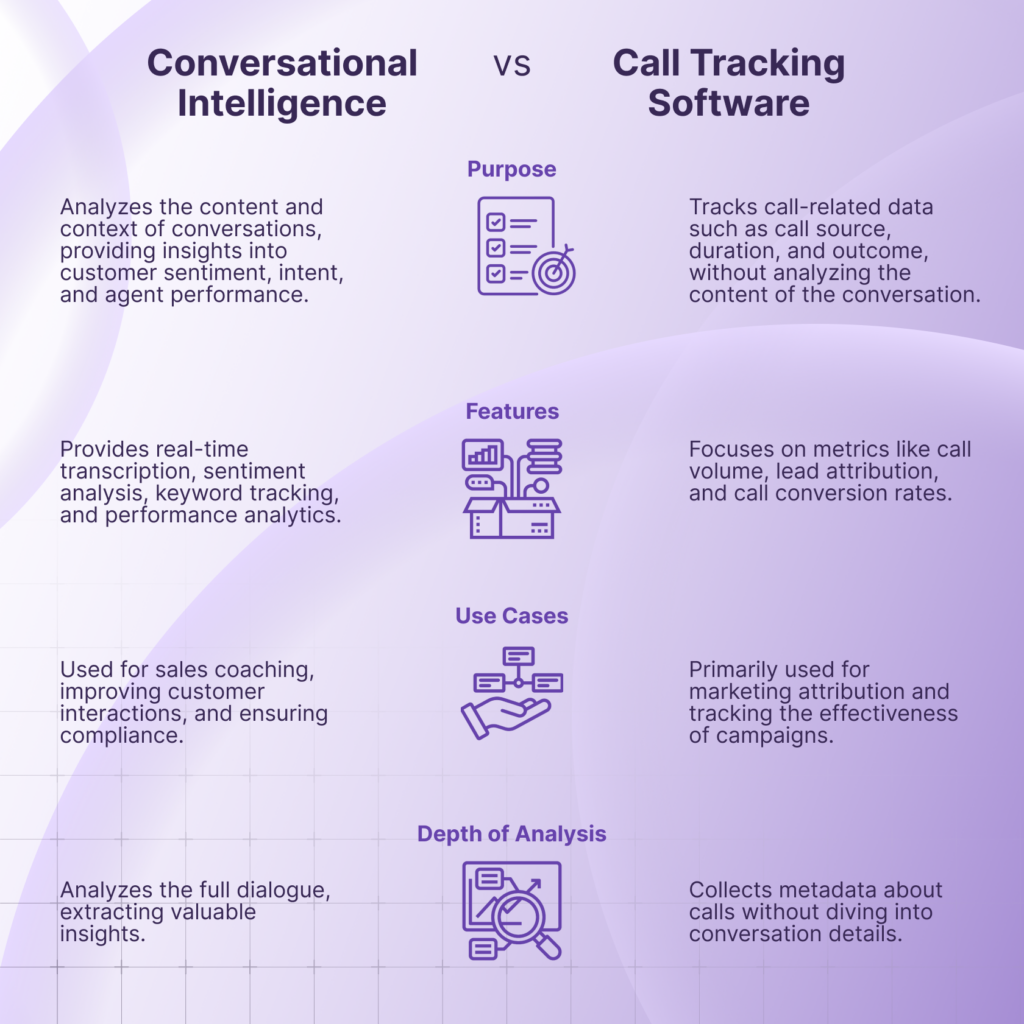
Difference Conversational Intelligence vs. Call Tracking Software
Key Features of Conversational Intelligence Platforms
Key features of Conversational Intelligence Platforms typically include:
1. Multichannel Integration
Conversational intelligence platforms support multiple channels, including voice, chat, email, and social media.
2. Agent Performance Monitoring
Platforms like ConvoZen.AI can evaluate agent performance by monitoring conversations and can identify training needs and provide feedback to agents.
3. Customer Insights
By analyzing conversations, these platforms provide deep insights into customer behavior, preferences, and pain points.
How Can Businesses Benefit from ConvoZen.AI’s Conversational Intelligence?
Businesses can benefit and grow in several impactful ways:
1. Enhanced Customer Support
- The platform provides real-time insights into customer support conversations.
- Enables agents to offer personalized solutions, resolve issues faster, and improve overall customer satisfaction.
2. Agent Performance Monitoring
- It identifies strengths and areas for improvement, helping teams to boost productivity.
- ConvoZen.AI helps to monitor agent-customer interactions, giving managers a clear view of team performance.
3. Seamless Omnichannel Integration
- ConvoZen.AI supports conversations across voice, chat, video chat, and email channels.
- It gives businesses a comprehensive view of their customer interactions and ensures consistent messaging across platforms.
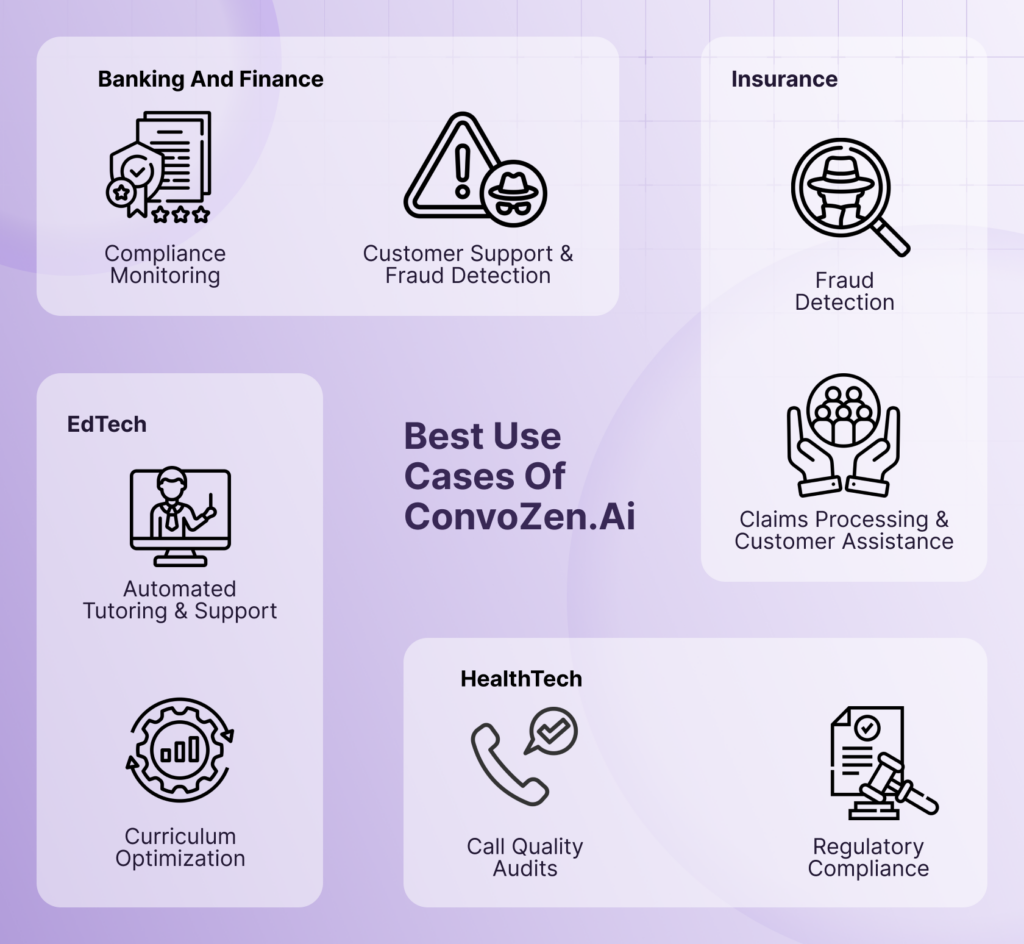
Best Use Cases of ConvoZen.AI
ConvoZen.AI is used across various industries such as:
Conclusion
One key problem that ConvoZen.AI solves is the challenge of ensuring consistent compliance and quality monitoring across large customer support teams.
By providing real-time insights, this conversation intelligence software helps organizations mitigate risks, improve agent performance, and drive better customer outcomes. This software not only enhances operational efficiency but also helps in compliance monitoring, sales optimization, and personalized customer support.
Click to book a demo.
FAQs
Some free conversation intelligence software options may offer basic features such as call recording, simple sentiment analysis, or keyword tracking.
Conversation intelligence is important because it enables businesses to gain deep insights from customer interactions, which can enhance decision-making and improve operational efficiency.
A great example of conversation intelligence is ConvoZen.AI. It analyzes customer-agent interactions in real time, providing businesses with insights into customer sentiment.
To download conversation intelligence software, you can typically visit the provider’s website, such as ConvoZen.AI, where you can request a demo or sign up for access.